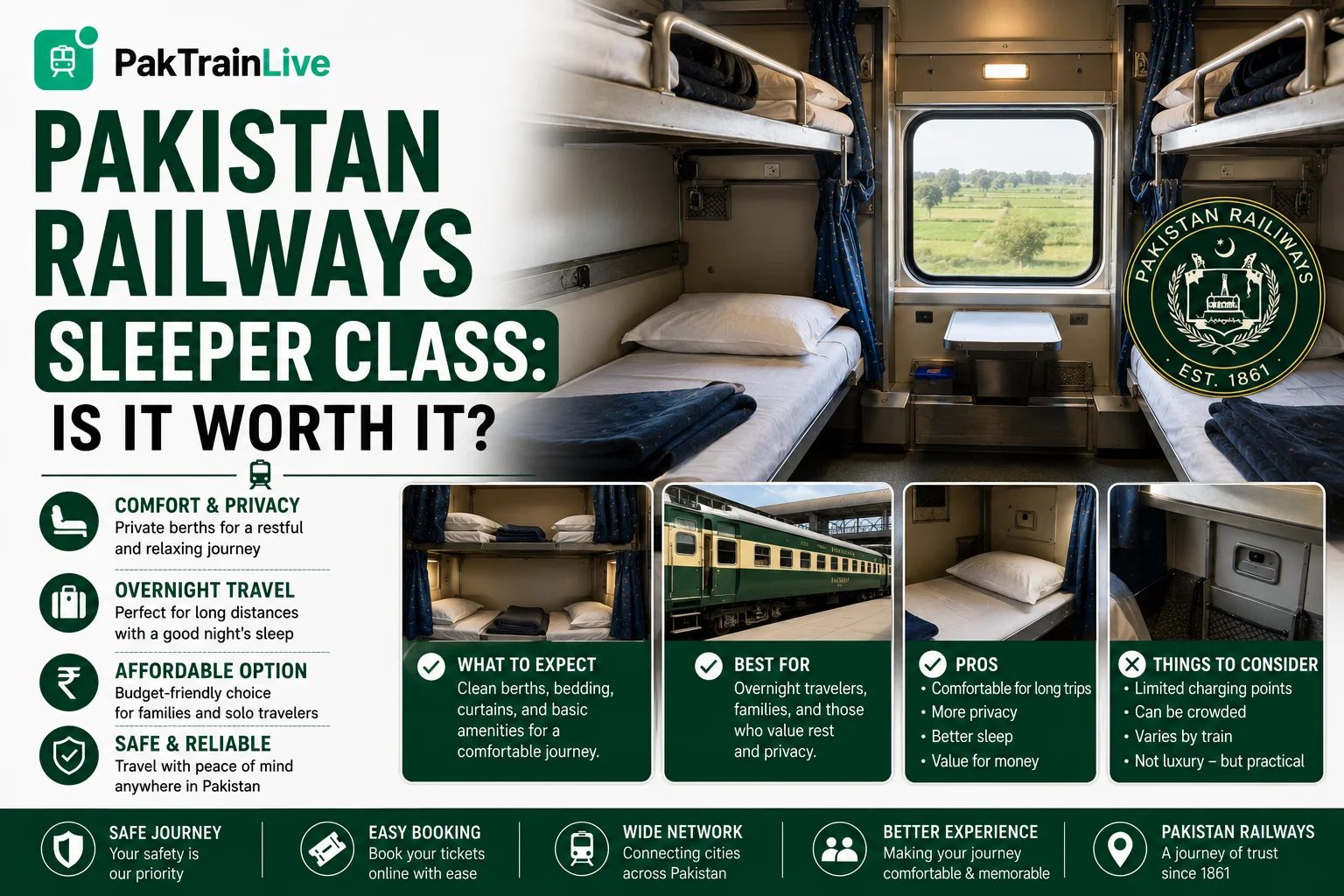
Sleeper Class is one of the most misunderstood parts of Pakistan Railways. Many passengers imagine it as either a luxury experience or an unnecessary indulgence, when in reality it is better understood as a strategic comfort choice for the right type of journey.
Whether Sleeper Class is worth it depends on three variables: route length, your tolerance for fatigue, and the reason you are traveling. On an overnight intercity trip with work or family obligations immediately after arrival, better rest can have real economic and personal value. On a shorter daytime trip, the premium may not matter as much.
This guide breaks the decision down in practical terms rather than marketing language. The goal is not to romanticize Sleeper Class but to help passengers understand when it changes the journey enough to justify the fare difference.
What Sleeper Class Actually Buys You
The first benefit is obvious: the ability to lie down instead of remaining upright for an entire overnight trip. That single change transforms how a long journey feels, especially for older passengers, families, and anyone arriving with responsibilities the next morning.
But the value is not just about sleeping. Sleeper travel also changes your posture, privacy, luggage management, and mental energy. A passenger who can stretch out, reduce constant seat friction, and organize belongings more calmly usually arrives in much better condition.
This matters on routes where the railway is competing not only with buses but also with the expectation that long-distance travel should not leave you wrecked for the rest of the day.
Who Gets the Most Benefit
- Families traveling overnight with children
- Passengers over longer corridors such as Karachi-Lahore or similarly demanding routes
- Older travelers who find upright seating physically draining
- Business or event travelers who need to function soon after arrival
- Passengers carrying the emotional or physical load of a complex trip rather than a casual leisure ride
When Sleeper Class Is Probably Not Necessary
On short or medium daytime journeys, paying extra for a berth often produces less value. If you will be awake the whole time and the ride is measured in a handful of hours, a good seat in an appropriate coach may be enough.
Similarly, very experienced budget travelers who can sleep almost anywhere may prefer to save money for a hotel, destination transport, or return ticket. That can be a rational choice if fatigue tolerance is genuinely high.
The key is to avoid abstract thinking. Ask whether this specific trip benefits from horizontal rest. If the answer is no, a berth may be nice but not necessary.
What First-Time Riders Often Misjudge
- They assume a berth guarantees perfect sleep
- They underestimate the value of booking position within the coach
- They treat bedding and personal comfort preparation as somebody else’s problem
- They fail to consider whether late-night boarding or very early arrival reduces the value of the berth
- They compare Sleeper Class only on fare, not on next-day fatigue
Comfort, Privacy, and Realistic Expectations
Sleeper Class improves the odds of rest, but it does not create a hotel room on rails. Noise, movement, station interruptions, and the shared nature of train travel still exist. Passengers who expect perfect silence are setting themselves up for disappointment.
What you should expect instead is a significant reduction in physical strain. That is often enough to make the class worthwhile, even if sleep remains lighter than it would be at home.
Privacy expectations should also stay grounded. The real gain is not isolation from humanity; it is greater control over your body, luggage, and recovery during a long trip.
How to Decide Rationally
- Estimate the real length of the trip, not the best-case timetable.
- Ask what state you need to be in when you arrive.
- Compare the fare difference against the value of lower fatigue.
- Consider who is traveling with you and how they handle overnight movement.
- Use live train information from PakTrainLive to see whether that service is operating smoothly before departure day.
Booking Tips That Matter More Than Passengers Think
If you know you want Sleeper Class, do not leave the booking too late on popular routes or holiday periods. The difference between getting the class you actually want and settling for whatever remains can change how you remember the trip.
Read the route and departure hour together. A berth has more value on a train that spends most of its core journey during sleeping hours than on one where the sleep window is fragmented.
And remember that the decision should align with the total travel plan. Sometimes the better move is to pay slightly more for onboard rest and slightly less for emergency fixes after arrival.
Comparing Cost Against the Next-Day Impact
The fare premium for Sleeper Class varies by route, season, and train. On popular overnight corridors, you might pay 30% to 50% more for a berth than for a reserved seat in another class. The question is not whether that number sounds large in isolation, but whether the next-day recovery is worth it.
Think of it this way: if you arrive at your destination wrecked and lose a full day of productivity, the savings from a cheaper ticket evaporate quickly. If you are traveling for business, family obligations, or tight schedules, investing in Sleeper Class often returns value immediately.
For leisure travelers with flexible plans, the calculation is different. You might have time to recover, or the recovery itself might be part of the trip. In that case, a cheaper ticket and a slower return to form may be the wiser choice.
The key is to calculate your real cost, not just the ticket price. Add in missed work hours, extra meals or accommodation if you arrive too tired to function, or the cost of taking an expensive flight instead because the train left you too fatigued. When you see the full picture, Sleeper Class often looks much more reasonably priced.
The Decision Behind the Decision
Guides like this are useful because rail passengers often think they are making one simple purchase when they are actually making a chain of connected choices. A ticket, class, or booking action changes sleep quality, stress levels, family coordination, and even how much recovery time is needed after arrival. Once you see those connections, better travel decisions become much easier.
This is also why seemingly small details deserve serious attention. The best travel advice is rarely glamorous. It is usually a disciplined approach to preparation: knowing the route, choosing the right class, confirming the documents, and using live information instead of assumptions. Those habits create more value than chasing prestige or false economy.
For Pakistan Railways in particular, practical literacy matters because the network rewards passengers who engage with it intelligently. The more you understand how to match a trip to the right booking and the right expectations, the more consistently rail becomes a useful, repeatable part of your travel life rather than a gamble.
How PakTrainLive Fits In
PakTrainLive helps at the margins of this decision by showing live route performance, train progress, and schedule context. If you are paying extra for comfort, you should also know whether the train is moving in a way that supports your plan. Check train delay history and on-time performance before deciding whether rest on this specific service will actually happen.
In short, Sleeper Class is worth it when rest materially improves the success of the trip. It is not a status purchase. It is a fatigue-management tool, and on the right route that makes it a smart one. The best passengers think beyond the ticket price and ask whether recovery time before or after the journey might cost more than Sleeper Class itself.