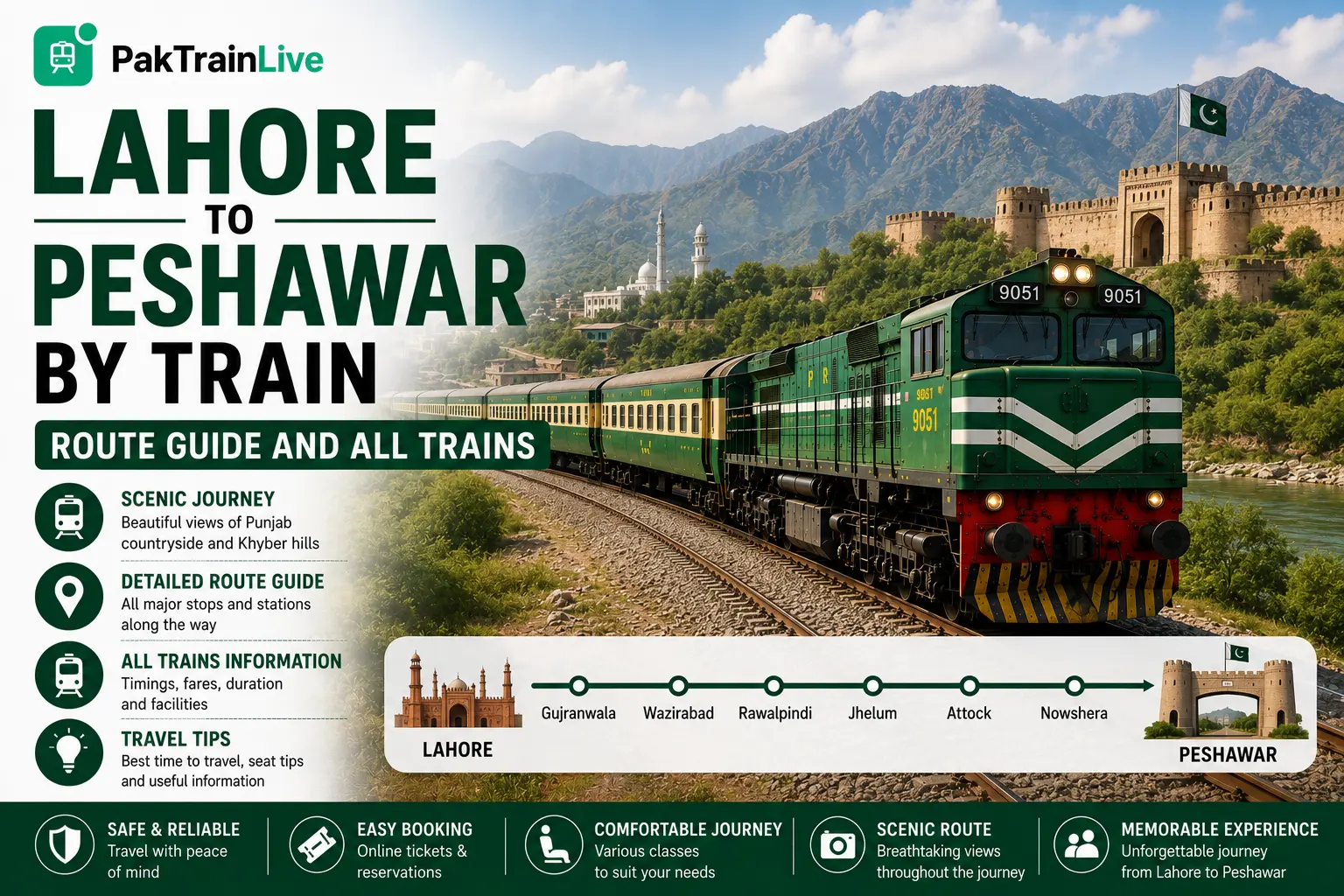
Lahore to Peshawar is one of Pakistan’s most straightforward yet still culturally rich rail journeys. It connects central Punjab to Khyber Pakhtunkhwa through a corridor that is useful for business, family visits, administrative travel, and broader intercity movement.
Because the route is neither as short as a casual commute nor as epic as Karachi-bound journeys, passengers sometimes underplan it. That is a mistake. Medium-distance routes are often where class choice, departure timing, and arrival-side logistics matter most because travelers expect them to be simple.
This guide explains how to choose trains wisely, what to expect on the route, and how to use live information to make the day run more smoothly.
Journey Time and Rhythm
Passengers should generally think in terms of a substantial half-day journey, though exact feeling varies by stop pattern, service identity, and operational conditions.
This is a route where departure time strongly shapes the experience. Morning travel can support same-day work or family plans, while later departures may shift the emotional center of the trip toward arrival logistics.
The distance is long enough that seat comfort matters, but short enough that many passengers are tempted to neglect it. That tension defines a lot of avoidable frustration.
Best Trains for This Route
| Train | Typical role | Why passengers choose it |
|---|---|---|
| Khyber-oriented major expresses | Classic corridor coverage | Strong fit for travelers who want a direct sense of the route’s main identity |
| Main-line intercity services | Flexible timing option | Useful where schedule alignment matters more than symbolic route branding |
When choosing among services, focus first on the time you need to function in Peshawar. A train that arrives at a more useful hour can outperform a slightly more famous alternative.
This is also a route where pickup timing benefits significantly from live tracking because urban arrival coordination becomes easier when your ETA is grounded in actual movement.
Major Stops and What They Mean
One reason the Lahore to Peshawar route remains useful is that it connects more than just the endpoints. The stop pattern influences boarding crowds, catering quality, and even punctuality, so travelers should read the route as a chain of regional markets rather than a single straight trip.
- Rawalpindi is one of the route’s key markers and can change passenger turnover dramatically depending on the service.
- Intermediate Punjab and upper-corridor stations shape whether the journey feels brisk or layered with repeated pauses.
- Approach into Peshawar carries its own regional identity, which is part of why the route feels more distinctive than pure timetable statistics suggest.
If your stop is a secondary station rather than the terminus, keep your phone charged and watch the live map before arrival. That matters more on long-distance services where station dwell times can be short and platform announcements may be difficult to hear.
Booking Strategy and Class Selection
If you need to arrive mentally fresh, choose a class that supports sustained comfort rather than only immediate savings.
Groups or families should think about seat arrangement early, especially on dates with heavy demand or social travel pressure.
Passengers used to shorter Punjab journeys may underestimate how much a better seat matters by the final third of the trip.
PakTrainLive does not sell tickets, but it helps you compare trains before you commit. Use the live train directory, check the latest fare guide, and then book the service that best matches your schedule rather than automatically choosing the first option you find.
What to Expect On Board
Pack lightly but intentionally. You do not need overnight-load luggage logic, but you do need water, charging backup, and enough food planning to avoid unnecessary discomfort.
Window-seat travelers often enjoy this route more because the sense of moving across regions is part of the value of the trip.
Treat the train as a working intercity space, not a guaranteed quiet compartment. That expectation produces better planning and less irritation.
Most long journeys become easier when you pack for infrastructure realities rather than the ideal brochure version of the trip. A water bottle, power bank, tissues, and a light layer solve most comfort issues better than overpacking luggage.
Weather and Seasonal Planning
Fog risk on parts of the corridor can complicate winter timing, especially around departures and arrivals that depend on the smoother functioning of shared main-line traffic.
In warmer months, the route’s medium length makes coach temperature and airflow more important than passengers first assume.
Holiday periods change the emotional tone of the train, sometimes making it livelier and less restful than weekday business-oriented travelers expect.
This is also why flexible expectations matter. A route that feels simple in mild weather can become tiring when heat, fog, or holiday demand compresses station operations. Build margin into your itinerary if a meeting, wedding, or onward bus connection matters.
Arrival, Transfers, and Last-Mile Planning
Plan your Peshawar-side transfer before the day begins. That is especially important if you are heading to a family home, institutional office, or onward road connection.
If someone is receiving you, ask them to track the train rather than waiting based on the timetable alone.
Protect a little buffer if the trip ends with an appointment, because even moderate slippage can reshape a tightly packed day.
For first-time travelers, the station exit often creates more stress than the train ride itself. Decide in advance how you will leave the station, how much luggage you can comfortably move alone, and whether your arrival time makes local transport easy or inconvenient.
Mistakes First-Time Travelers Make
- Underestimating the route because it is not one of the longest in the system
- Skipping comfort planning for a trip that still lasts long enough to matter
- Ignoring seasonal timing effects such as winter fog
- Not coordinating pickup or last-mile transport in advance
- Choosing a train only by name without checking how it fits the actual day
None of these mistakes are catastrophic, but together they create the impression that rail travel is harder than it really is. The reality is that most journeys go smoothly when passengers plan around timing, class, and station logistics instead of treating the trip like a last-minute bus ride.
Who Should Take This Journey by Rail
Rail is strongest on routes like the Lahore to Peshawar route when the traveler values predictable luggage handling, city-center to city-center movement, and the ability to stay connected to the actual progress of the trip. That makes it especially useful for families, students, budget-conscious professionals, and people who simply prefer a slower but more legible form of long-distance travel.
It is less ideal for passengers whose plans collapse if even a moderate delay appears. In those cases, the right choice may still be rail, but only if the traveler gives themselves enough margin to absorb real operating conditions. Matching the mode to the consequences of arrival is one of the most mature travel decisions a passenger can make.
That perspective also explains why route guides matter. A train journey is not just a timetable and a seat number. It is a moving chain of decisions about comfort, timing, station behavior, and onward transport. Passengers who understand that tend to find rail more useful and more enjoyable than those who expect it to behave like a completely frictionless airline substitute.
How PakTrainLive Helps on Travel Day
PakTrainLive is useful here because it turns a medium-distance intercity route into a more controllable experience. Passengers can leave for the station more intelligently and recipients can time pickups better.
That means less wasted waiting at both ends and a more trustworthy sense of when the day will actually unfold.
Before leaving home, check the schedule search and your chosen service on PakTrainLive. On the platform, refresh once more. That simple habit reduces missed departures, unnecessary waiting, and confusion about whether a train is actually on time.