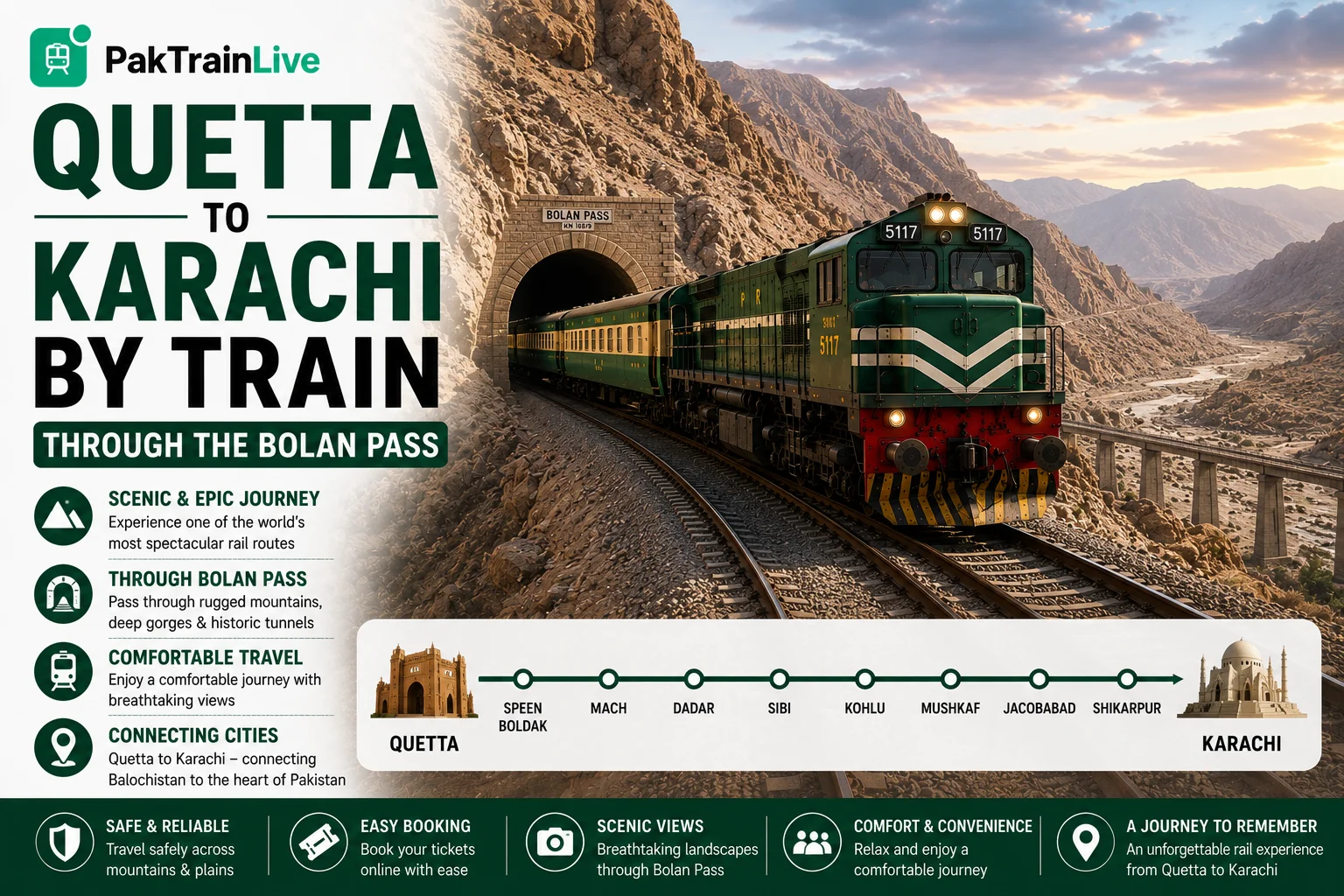
Quetta to Karachi by train is one of Pakistan’s most characterful long-distance journeys because it combines practical intercity travel with some of the country’s most memorable rail landscapes. It is not the easiest corridor in the system, but that is precisely why passengers remember it.
The route asks travelers to think differently from the way they would on a simple trunk-line express. Geography, terrain, and the length of the transfer into Karachi all shape the experience. Planning is therefore not optional if you want the journey to feel rewarding rather than merely exhausting.
This guide explains what the route is really like, who it suits, and how to prepare for the practical realities before and during the trip.
Journey Time and Rhythm
This is a long journey whose timing should be treated with humility. Terrain and corridor character matter, so travelers should think in broad operational windows rather than obsessing over idealized precision.
Because the route carries scenic value, the experience is strongly affected by whether you are awake in the sections you most want to see. Seat and class decisions therefore shape more than comfort; they shape how much of the route you actually appreciate.
The journey also changes emotional rhythm. It begins as a departure from a highland city and gradually reorients toward the scale and density of Karachi, which can make the travel day feel like a narrative rather than a straight line.
Best Trains for This Route
| Train | Typical role | Why passengers choose it |
|---|---|---|
| Jaffar Express and comparable services | Long-distance scenic connector | Best for travelers who want route identity as well as city-to-city utility |
| Broader intercity options through corridor sections | Segment-specific use | Useful for travelers whose actual destination lies between the marquee endpoints |
Your best choice depends on whether you care more about the classic through-service identity or the practical alignment of departure time, class availability, and onward needs in Karachi.
A scenic reputation should not blind passengers to fatigue. On a route like this, a slightly better class decision can improve the whole experience more than a slightly more famous train name.
Major Stops and What They Mean
One reason the Quetta to Karachi trip remains useful is that it connects more than just the endpoints. The stop pattern influences boarding crowds, catering quality, and even punctuality, so travelers should read the route as a chain of regional markets rather than a single straight trip.
- The Bolan-related sections define the route’s emotional core and are why many travelers treat the journey as memorable rather than merely functional.
- Intermediate stations matter because they break the route into recognizable chapters, each with different passenger movement and terrain context.
- As the train approaches the Sindh side of the journey, the route’s atmosphere gradually shifts toward the logic of the broader Karachi-bound network.
If your stop is a secondary station rather than the terminus, keep your phone charged and watch the live map before arrival. That matters more on long-distance services where station dwell times can be short and platform announcements may be difficult to hear.
Booking Strategy and Class Selection
Travelers should book with the route’s real length and terrain-related identity in mind. This is not the moment to be casually optimistic about how much discomfort you can tolerate.
If seeing the route matters to you, think about daylight exposure before you finalize the booking. If reaching Karachi in usable condition matters more, optimize for rest and recovery.
For family travel, comfort planning becomes even more important because the trip is long enough for small frictions to become genuine strain.
PakTrainLive does not sell tickets, but it helps you compare trains before you commit. Use the live train directory, check the latest fare guide, and then book the service that best matches your schedule rather than automatically choosing the first option you find.
What to Expect On Board
Carry food, water, and a realistic comfort kit. Scenic or not, a long train journey still punishes passengers who depend entirely on chance for basic needs.
If you are taking photos or hoping to enjoy major landscapes, keep your essentials organized so that the journey’s best moments are not spent searching for chargers or untangling bags.
Accept the route for what it is: a real railway trip across demanding geography, not a frictionless premium leisure product.
Most long journeys become easier when you pack for infrastructure realities rather than the ideal brochure version of the trip. A water bottle, power bank, tissues, and a light layer solve most comfort issues better than overpacking luggage.
Weather and Seasonal Planning
Seasonality matters because heat, dust, and the practical comfort of long-distance travel can shift sharply over the year.
Weather also affects how enjoyable the scenic portions feel. Passengers who understand the season they are traveling in generally set better expectations for both comfort and visibility.
As always, holiday demand changes coach atmosphere and booking pressure, so reserve early if your dates are fixed.
This is also why flexible expectations matter. A route that feels simple in mild weather can become tiring when heat, fog, or holiday demand compresses station operations. Build margin into your itinerary if a meeting, wedding, or onward bus connection matters.
Arrival, Transfers, and Last-Mile Planning
Do not treat Karachi arrival as an afterthought just because the headline story of the route is the scenery. After a long ride, city-side transfer planning becomes even more important.
If someone is collecting you, share live progress before the train reaches the final urban segment so they can time their movement sensibly.
If you need to continue onward by road, hotel check-in, or family coordination, protect yourself with buffer time.
For first-time travelers, the station exit often creates more stress than the train ride itself. Decide in advance how you will leave the station, how much luggage you can comfortably move alone, and whether your arrival time makes local transport easy or inconvenient.
Mistakes First-Time Travelers Make
- Choosing the trip for scenery but forgetting to plan for fatigue
- Ignoring how much class choice affects the quality of a long route
- Arriving underprepared for food, water, and charging needs
- Treating Karachi-side onward travel as a separate problem instead of part of the same trip
- Failing to use live status updates before pickup coordination
None of these mistakes are catastrophic, but together they create the impression that rail travel is harder than it really is. The reality is that most journeys go smoothly when passengers plan around timing, class, and station logistics instead of treating the trip like a last-minute bus ride.
Who Should Take This Journey by Rail
Rail is strongest on routes like the Quetta to Karachi trip when the traveler values predictable luggage handling, city-center to city-center movement, and the ability to stay connected to the actual progress of the trip. That makes it especially useful for families, students, budget-conscious professionals, and people who simply prefer a slower but more legible form of long-distance travel.
It is less ideal for passengers whose plans collapse if even a moderate delay appears. In those cases, the right choice may still be rail, but only if the traveler gives themselves enough margin to absorb real operating conditions. Matching the mode to the consequences of arrival is one of the most mature travel decisions a passenger can make.
That perspective also explains why route guides matter. A train journey is not just a timetable and a seat number. It is a moving chain of decisions about comfort, timing, station behavior, and onward transport. Passengers who understand that tend to find rail more useful and more enjoyable than those who expect it to behave like a completely frictionless airline substitute.
How PakTrainLive Helps on Travel Day
Live tracking adds major value on this route because the distance and route character make static assumptions unreliable. Families and pickups need something more accurate than hope.
PakTrainLive helps you convert a legendary journey into a more manageable one by showing actual movement and helping everyone involved plan the beginning and end more intelligently.
Before leaving home, check the schedule search and your chosen service on PakTrainLive. On the platform, refresh once more. That simple habit reduces missed departures, unnecessary waiting, and confusion about whether a train is actually on time.