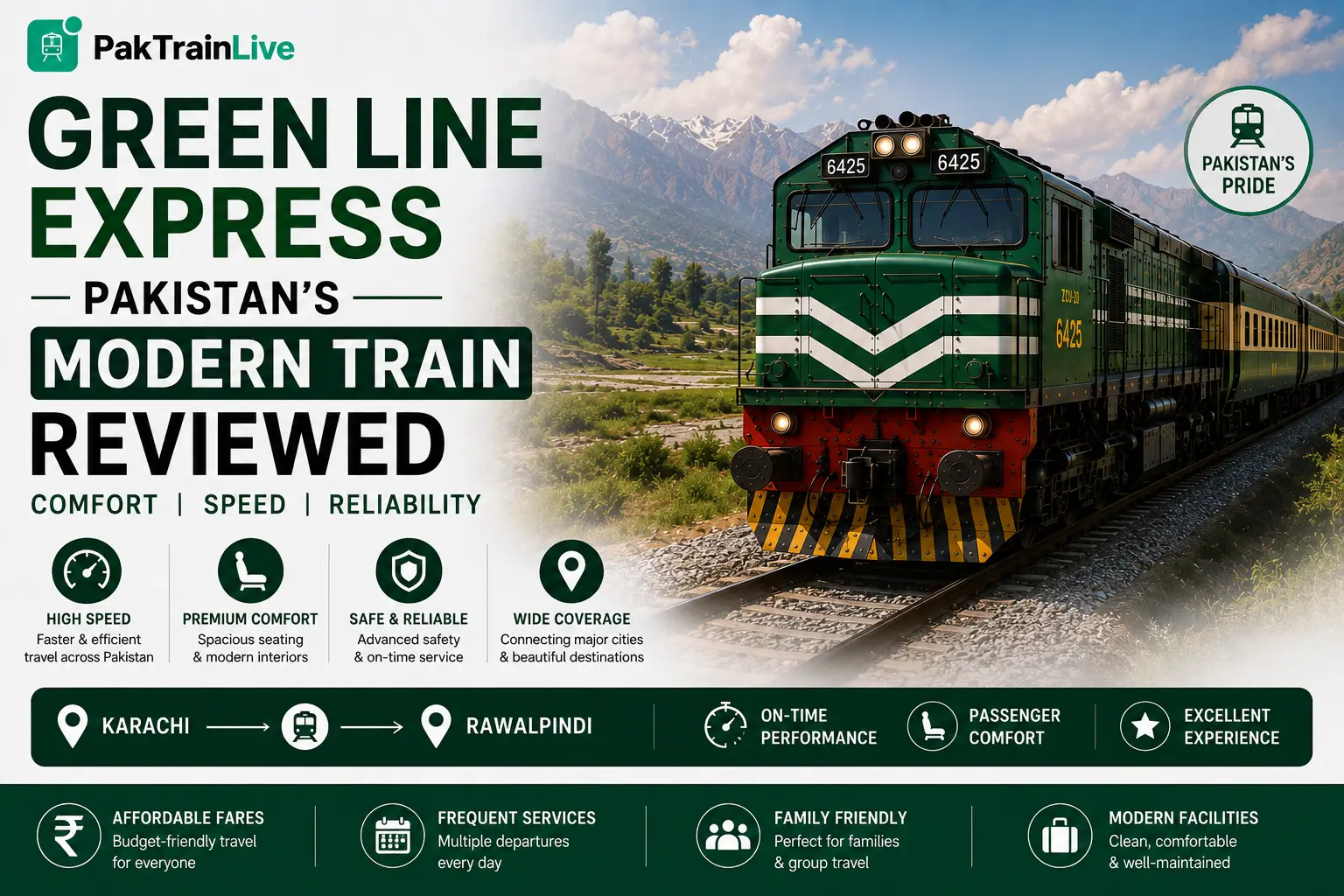
Green Line Express stands out because it represents a more modern-looking chapter in Pakistan Railways branding. When travelers talk about a train feeling newer, cleaner, or more premium, Green Line often enters the conversation quickly.
That reputation creates curiosity but also confusion. Some passengers assume it will feel like a radically different railway product, while others assume the branding is all image. The truth sits in between and is more useful than either extreme.
This review explains what Green Line actually offers, who should consider it, and when a modern train identity translates into real passenger value.
History and Reputation
Green Line’s significance comes from what it signals: an effort to present rail travel as contemporary, credible, and attractive to passengers who might otherwise default to air or road.
The brand therefore matters beyond aesthetics. It is part of a wider attempt to make long-distance rail feel like a serious modern option rather than a legacy obligation.
That said, passengers should still judge the service on lived outcomes rather than on visual promise alone.
Route, Purpose, and Identity
The train’s route role places it on some of the most important passenger corridors in the country, which means it is judged not only against other trains but also against competing modes of intercity travel like buses, flights, and road transport.
This gives Green Line a different burden from obscure regional services. It must justify expectations around time, comfort, reliability, and image at a national level where every user can compare it to visible alternatives.
For many travelers, riding Green Line is partly about testing whether Pakistan Railways can feel meaningfully upgraded on major routes and whether a branded modern train can sustain that promise across the full journey.
Coaches, Classes, and Rolling Stock
Passengers typically expect Green Line to deliver a better visual and comfort impression than older mainstream services. That expectation can be reasonable, but it should still be grounded in realistic class choice and live operating reality rather than branding alone.
A newer or better-presented coach helps, but it does not remove the need to choose the right class for trip length and personal tolerance. Premium branding means nothing if the seat choice still leaves you exhausted at arrival.
The train’s strongest value often appears when the passenger’s expectations are modern but realistic rather than utopian. Green Line works best for travelers who want comfort improvement without magical thinking about what a train name can deliver.
When travelers compare services only on headline travel time, they often miss the operational personality of a train. A train with slightly longer running time can still be the smarter option if its stop pattern, boarding station, or coach mix better matches your actual needs.
What the Ride Feels Like
What riders usually notice first is the attempt at a more polished identity. That can create a clearer sense of intentional product design, which matters because long-distance rail comfort is psychological as well as physical.
Passengers who previously avoided trains because they imagined an outdated experience may find Green Line easier to trust as a first return to rail.
At the same time, the basics still matter: route length, departure timing, and how well your chosen coach supports the actual trip you are taking.
Rail fans notice these details instinctively, but ordinary passengers benefit from them too. A good train is not just the one that moves fast; it is the one whose boarding, seat comfort, overnight rhythm, and arrival timing line up with the purpose of the trip.
Scenery and Route Character
Green Line is not defined by a single iconic scenic segment in the way some mountain-associated services are. Its value comes more from the modernized feeling it tries to bring to classic high-importance corridors.
That still has experiential weight. For many passengers, seeing a known route through a train that feels more contemporary is itself part of the appeal.
In that sense, Green Line offers a kind of product-level scenery: a visible argument that rail can still evolve.
Who This Train Is Best For
Green Line suits travelers who want the reassurance of a prominent branded service with a more current and contemporary feel than some legacy alternatives.
It is especially attractive to passengers who are open to rail travel but need confidence that the experience will feel sufficiently modern and well-maintained for a long intercity journey.
If you are already comfortable with old-school rail travel, the benefits may feel incremental or cosmetic. If you are rail-curious but skeptical about modernity, they may feel much larger and more meaningful.
That is why spotlighting individual trains matters. Two services may connect similar cities, but the passenger experience can differ dramatically depending on departure hour, coach condition, stop density, and the type of traveler using the train.
Booking and Boarding Tips
Do not assume brand solves everything. Still check departure timing, class, and route fit before booking.
If your choice is between Green Line and another express, compare the whole trip outcome rather than just image. Arrival hour and class availability may matter more than reputation.
Travelers sending family members often appreciate Green Line because the train’s identity itself can provide reassurance, but live tracking should still be part of the plan.
Use the live train pages and route search tools before booking. If your plan is flexible, compare alternatives instead of assuming the most famous service is automatically the best choice every single day.
How This Train Compares With Similar Services
The easiest mistake passengers make is to compare trains only by headline fame or approximate running time. In practice, trains compete through a wider bundle of qualities: departure hour, coach condition, passenger mix, stop pattern, and how believable the arrival timing feels once the route is underway. A train with a legendary name may still be the wrong choice for a specific day if another service fits the trip more cleanly.
That does not reduce the value of Green Line Express. It clarifies it. A train becomes more impressive when you understand exactly where it wins and where it should be judged more cautiously. Travelers who compare services this way usually end up happier with their booking because they are choosing for fit rather than myth.
For readers using PakTrainLive, this is where live context matters. Looking at the service in isolation tells only part of the story. Comparing it against other active trains on the corridor gives a better sense of whether you are choosing heritage, convenience, speed, comfort, or route identity as the dominant priority.
How to Track It Live
A premium-feeling train still benefits tremendously from live visibility and real-time tracking. PakTrainLive helps confirm whether the service is actually performing in line with the day’s expectations rather than the brand story in your head.
That is especially useful on important pickups, city transfers, and long intercity days where realistic arrival timing and performance tracking matter for your entire day’s logistics.
On PakTrainLive you can open the service, check progress station by station, and compare the live position with the public timetable. That is especially useful when someone is collecting you from the station or when you need to estimate whether the train will arrive close to its advertised time.